
May 17, 2026
Blog
Three Signs Your Business Is Ready for AI Automation
Most businesses ask if they should automate before they should. Here are the three signs that mean you're actually ready, and the one that means you're not.
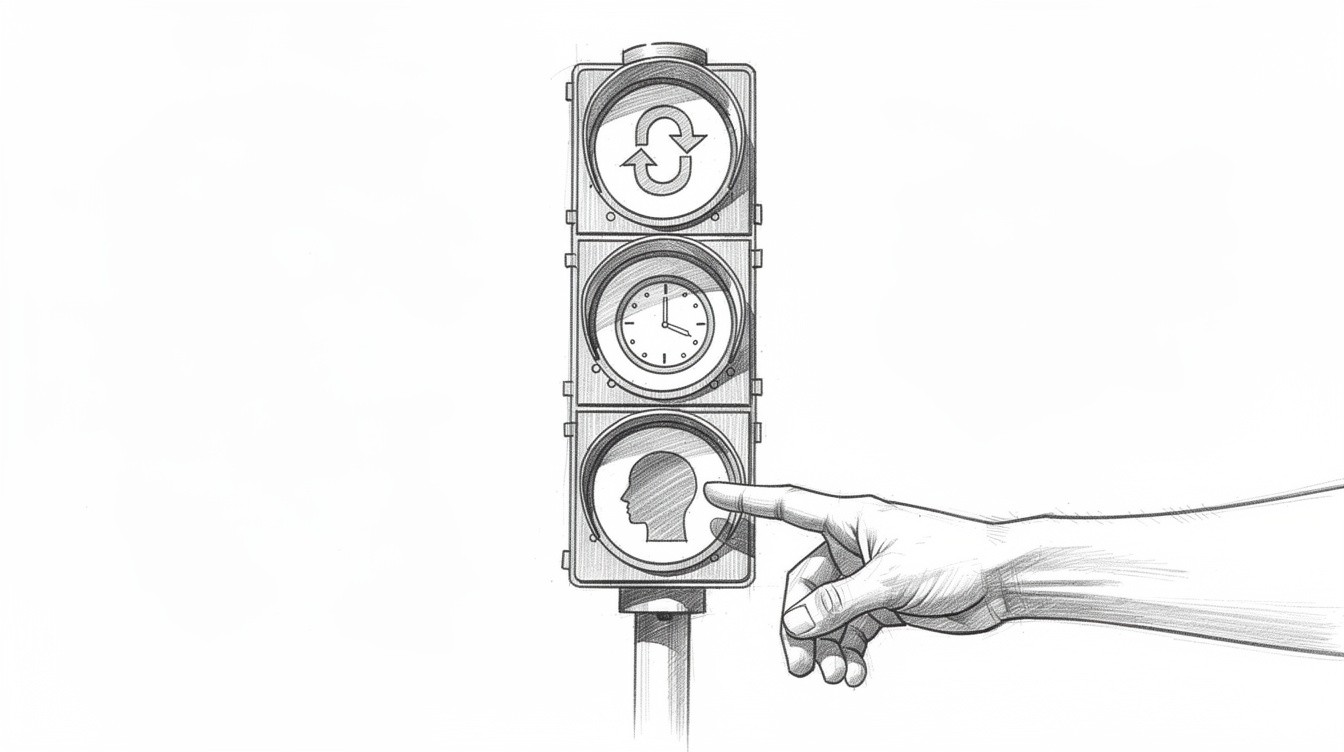
Most businesses ask about AI automation a year too early or a year too late.
Too early, and you're automating a process that isn't stable enough to automate. Too late, and you've spent twelve months paying people to do work a system should have handled.
There's a window. Here's how to know you're in it.
Sign 1: The same task is eating the same hours every week
Look at where your team's time actually goes. Not the big projects. The repetitive stuff.
Answering the same five questions on the phone. Typing the same follow-up emails. Copying lead info from one tool into another. Confirming appointments. Chasing no-shows.
If one task shows up every single week, takes real hours, and never changes shape, that's an automation candidate.
The test is repetition plus stability. A task you do a hundred times the exact same way is a system waiting to be built. A task that's different every time is not (yet).
If you can describe a process in a sentence that starts with "every time X happens, someone does Y," you've found sign one.
Sign 2: You're losing money in the gaps, not the work
Here's the part most owners miss. The expensive problem usually isn't the work itself. It's the gap between when something happens and when someone gets to it.
A lead comes in at 6pm. Nobody sees it until 9am. The lead booked someone else at 6:15.
A customer calls during a busy stretch. It rings out. They don't call back.
A quote goes out. No follow-up for five days because the person who sends them was buried. The deal goes cold.
None of those are work problems. The work would have gotten done. The money was lost in the delay before the work started.
If you can point to revenue you're losing specifically because of response time, not because of capacity, that's sign two. And it's the strongest one. Gap problems have the clearest ROI because the cost is measurable and the fix is fast.
Sign 3: The process lives in one person's head
There's usually one person who "just knows how it works." How leads get routed. Who handles what. What to say to which type of customer. The rules aren't written down. They're in someone's memory.
That person is a single point of failure. When they're out, the process degrades. When they leave, it breaks. And you can't scale it, because you can't hand it to anyone else.
This one's a little different from the first two. A process trapped in someone's head usually isn't ready to automate yet, because there's nothing documented to automate. But it's the clearest sign you're at the edge of the window. The fix is to get the process out of the head and onto paper first. Then automate it. That sequencing is the whole game.
If you've got a key person who's the only one who knows how something runs, that's sign three. It means you're ready to start, even if step one is documentation, not building.
The sign that means you're NOT ready
One counter-sign matters more than the three above.
If your process changes every week because the business itself is still figuring out what it does, don't automate yet.
Automation locks in a process. If the process isn't stable, you'll spend more time rebuilding the automation than the automation saves you. Early-stage businesses, brand-new service lines, anything still in "we're trying things" mode: not ready. Stabilize first.
Automation is for the parts of the business that have stopped changing. The parts that work the same way every time, just slower than they should.
How to actually check
You don't need a consultant to run this on yourself. Take fifteen minutes.
Write down the three things your team does most often. For each one, ask:
Does this happen the same way every time? (repetition + stability)
Are we losing money in the delay, not the doing? (the gap)
Does only one person actually know how it works? (the bottleneck)
If you hit two of the three on any single process, that process is ready. If you hit all three, you're not early. You're late.
The window doesn't stay open forever. Every week you wait is another week of paying people to do what a system should be doing for under a few hundred dollars a month.
Run the check. The math usually settles the argument.